Excess bodyweight can cause fertility issues in both men and women. So, if a couple is trying to conceive, a joint weight loss programme not only increases your chances of conceiving but also fosters support, as you can motivate each other. Switching to our very low calorie, ketogenic rapid weight loss programme could, therefore, help you to achieve your dreams of starting a family the healthier way.

Weight and fertility in men
There is a direct connection between male obesity and low fertility rates. Overweight men are likely to have lower levels of testosterone, meaning that they produce fewer and lower-quality sperm. A lack of testosterone can also cause erectile dysfunction and reduce sex drive.
There is a greater likelihood of miscarriage or stillbirth in pregnancies where the father has obesity.

Weight and fertility in women
Being overweight can disrupt the levels of sex hormones in women's bodies, and the way that these hormones function. Research has suggested that this effect could be caused by insulin resistance, a condition that is common in people who are overweight. Both insulin resistance and changes to the production and function of the sex hormones can make it more difficult to conceive.
Some women face additional fertility issues because they suffer from polycystic ovary syndrome (PCOS). PCOS can cause women to gain weight; however, overweight itself can also exacerbate the condition, making it harder for women to lose weight and to conceive.
Weight doesn't just affect a woman’s ability to get pregnant naturally. Women are also less likely to conceive through IVF treatment if they are living with overweight or obesity.
Weight and fertility in men
There is a direct connection between male obesity and low fertility rates. Overweight men are likely to have lower levels of testosterone, meaning that they produce fewer and lower-quality sperm. A lack of testosterone can also cause erectile dysfunction and reduce sex drive.
There is a greater likelihood of miscarriage or stillbirth in pregnancies where the father has obesity.
Weight and fertility in men
Being overweight can disrupt the levels of sex hormones in women's bodies, and the way that these hormones function. Research has suggested that this effect could be caused by insulin resistance, a condition that is common in people who are overweight. Both insulin resistance and changes to the production and function of the sex hormones can make it more difficult to conceive.
Some women face additional fertility issues because they suffer from polycystic ovary syndrome (PCOS). PCOS can cause women to gain weight; however, overweight itself can also exacerbate the condition, making it harder for women to lose weight and to conceive.
Weight doesn't just affect a woman’s ability to get pregnant naturally. Women are also less likely to conceive through IVF treatment if they are living with overweight or obesity.

How Pronokal Supports Your Fertility Journey
Our programmes are medically supervised, using a healthy, very low-calorie keto diet with exercise and coaching, leading to rapid results and safe results, with protection against muscle loss. Free long-term follow-up helps you keep the weight off.
1 Initial Consultation
Consultation by Zoom or telephone, completely free. Free virtual or telephone consultation, we want to understand your goals and your special circumstances and to explain how PronoKal can help you.

2 Personalised Plan
We undertake a medical assessment and provide a personalised diet plan using a wide range of PronoKal meals (which won’t leave you feeling hungry!).
3 Ongoing Support
You will have a dedicated doctor and nutrition specialist who will help you start progressing quickly and safely, with no rebound effect and two years' aftercare. Scientifically proven results.

How PronoKal can help
Losing weight helps both men and women improve their chances of conceiving a baby, and PronoKal's PnK Method provides more benefits than standard calorie-counting diet plans.
Our programme centres around a very low calorie keto diet, which will help you lose weight faster and more effectively than most diet plans, without impacting your health or energy levels. This means you could get your family started earlier or be better prepared for your next IVF cycle. Keto diets have also been proven to reduce insulin resistance, something which can improve fertility in both sexes.

See How PronoKal Helps Customise Weight Loss To You
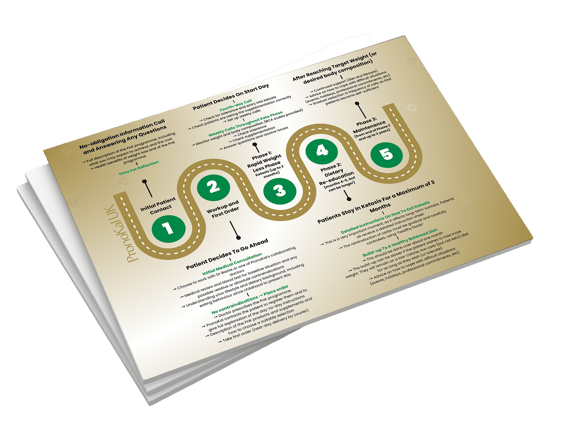
Download our PronoKal Process Map to visualise your potential weight loss timeline. See how our personalised approach guides you through each phase - from initial weight loss to long-term maintenance.
This visual guide shows:
- What to expect during each phase of your journey
- How we personalise the programme to fit your lifestyle
- The support you'll receive throughout the process
- Your path to sustainable results beyond the diet
Fill in your details on the form provided to receive your FREE copy!

Download The PronoKal Process Map
Latest News
Keep up to date with our latest in-house news
Frequently Asked Questions
How does weight loss affect fertility in men?
Excess weight affects many aspects of sperm production:
-
Testosterone is metabolised in the fat tissue. Excess fat tissue can cause more testosterone to be converted to oestrogen. Many studies have found improved testosterone levels after weight loss.
-
Overweight and obesity are often associated with insulin resistance and other hormonal changes that can reduce testosterone levels.
-
A raised genital temperature, as may be found in obesity, reduces sperm production.
Does diet quality affect fertility in men?
A high-quality diet that includes certain nutrients and avoids toxins can improve sperm production:
-
An appropriate intake of omega-3 and omega-6 fats is important for sperm production and quality. The typical Western diet has a great excess of omega-6 fats. A well-designed diet programme, such as the PronoKal PnK Method, will address this issue.
-
Pollutants that may be present in foods, such as BPA, pesticides and other toxins (alcohol and smoking), can affect hormone levels and can affect sperm counts.
-
A varied balanced diet will provide the micronutrients (vitamins and minerals) necessary for sperm production and quality. Talk to your doctor about supplementation if your diet lacks variety.
Does having irregular periods reduce fertility?
That depends on the cause. Not all women with irregular periods have problems of infertility, but it can be a sign of inconsistent ovulation and make tracking fertile windows more difficult.
When due to PCOS, overweight is a common finding. In this situation, the link appears to be through insulin resistance, found in some studies to be present in up to 80% of women with PCOS. Weight loss with programmes that improve insulin sensitivity (low-glycaemic index and ketogenic diets) will help to reduce the effects of PCOS and can even regularise your periods.